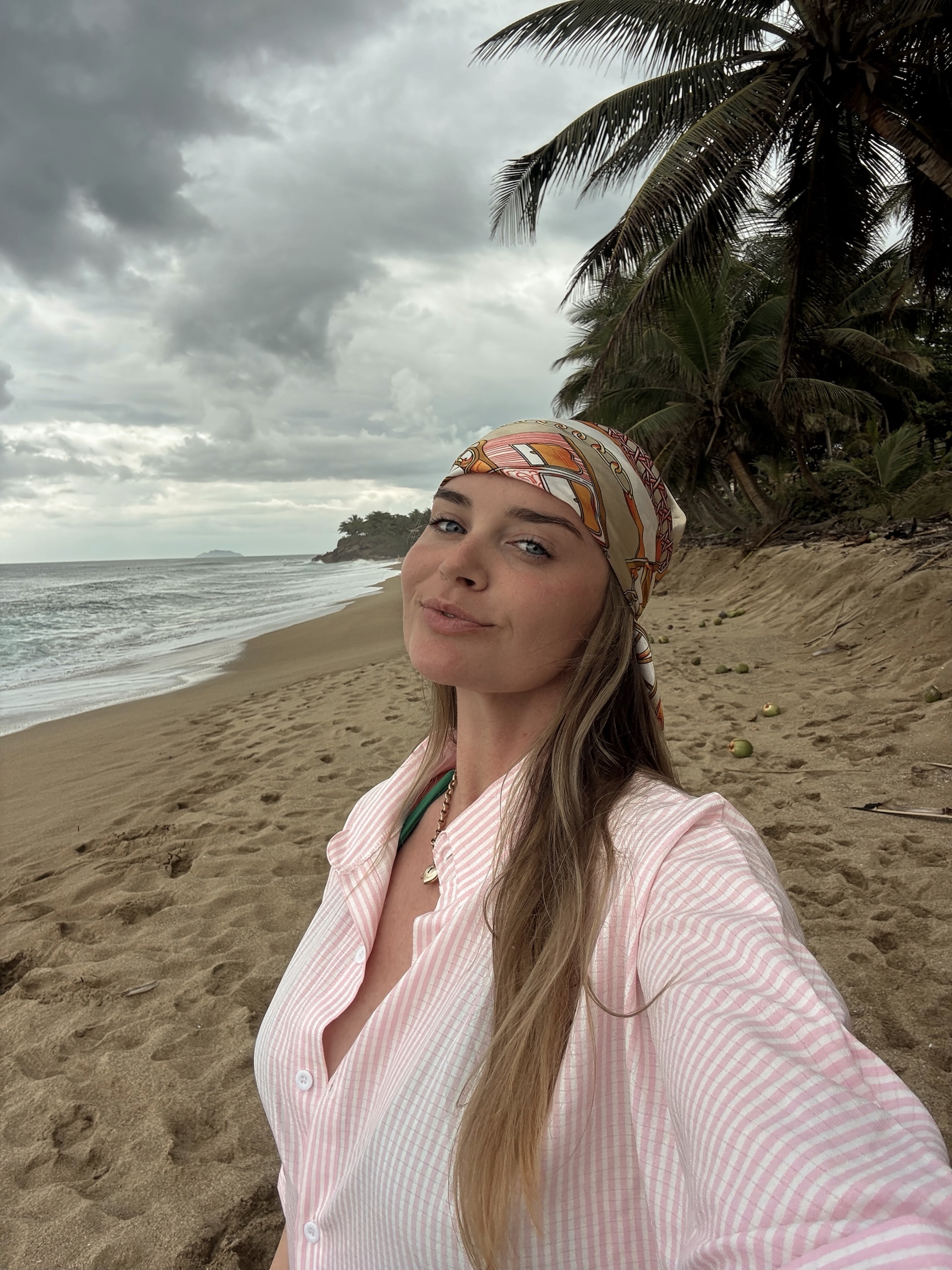
hey lovely, I'm Olivia ♡
ADHD diagnosed at 30.
Thank f**king god.
Doc figured it out in four minutes but it took me a month to pick up the medication. ADHD really said, "proof attached."
Join the club ♡
why I built this
I made the things I couldn't find anywhere else.
After the diagnosis I went looking for a space that got this specific experience. Not a clinical resource, not a parenting forum, just Something for the person who started school a year ahead, kept up fine, and then quietly drifted once the structure loosened. The person who's worked across five industries and understands exactly why now. The person who runs other people's operations remotely from the floor of a house in Vancouver and is very good at it.
I didn't find it. So I built it. Because that's also a very ADHD thing to do.
I wouldn't change how my brain works even if I could. It's the reason I moved to another country at 24 without blinking and ended up with a career that looks completely scattered on paper but makes sense to me.
What I did need, and what didn't exist, were tools built for this brain specifically. Guides that don't assume a linear brain, systems with a restart built in, resources for the week after your diagnosis when everything has rearranged itself and you have no idea what to do next.
That's what Soft Chaos makes. I built the first guides for myself. Now I'm sharing them with you.
I run it from the living room floor in Canada, usually on Australian time. Sometimes I'm back on the Gold Coast. Occasionally I'm in Mexico or the Caribbean. The work follows me everywhere and it always gets done.
Hey lovely. Welcome to the club.
So happy you're here.
Olivia ♡
founder, Soft Chaos ♡
where it started
Primary school.
And where it quietly started.
I'm a December baby, twelve days off being a 1995 kid. Back then, a lot of late-year kids were kept with the older cohort rather than held back, it was a pretty common call that parents and schools made together. Mine made the same one. I started school with the older group, kept up just fine, and primary school was good. I was curious, interested when what was being taught held my attention. Teachers had kind things to say and nothing about it was dramatic.
And then high school. The structure loosened and without it I had nothing keeping me locked in. A lot of staring out windows, a lot of being somewhere else entirely while technically being in the room. I did what I needed to pass and spent the rest of the time thinking about more interesting things.
No anxiety, no depression, just a brain that moved faster than every system around me was built for, and because nothing was ever visibly on fire, nobody looked closer and I just kept going.
the working years
Accepted into university. Decided it would be a living hell for my brain. Didn't go.
My whole life everyone said I should be a lawyer. Quick, direct, someone who rarely backs down and will see something through to the absolute end if I believe I'm right, and I was also genuinely interested in law and crime in a way that felt different from just finding it vaguely interesting. My favourite show in the entire world was Law and Order SVU. I wanted to be Olivia Benson from the age of ten. I still do, if I'm being honest.
So the degree I got accepted into was the entry point into law, and that tells you everything you need to know about how my brain works: I couldn't sit through a maths test but I had worked out exactly what I needed to do to get into the degree I actually wanted. If something mattered to me, I nailed it. Anything else never got a second thought.
Instead of going, I went and worked in a law firm straight out of high school. Watched how lawyers actually lived, saw the hours, saw what their lives looked like outside the job, and thought, no, this isn't for me. I thank myself almost every day for that decision because I got to see the reality before I committed years and a significant amount of money to finding it out the hard way.
That's when I went into banking, which I'm also deeply grateful for because the skills I built there were unlike anything else and I carry them into everything I do now. To this day I have never properly studied a single thing, my brain just figures out what it needs to pick up to get through whatever it needs to get through, and university would have been genuinely miserable for it.
What followed was a career that moved through a lot of different industries, for reasons that make complete sense to me now.
- Banking Six years of understanding how money actually works, how people make decisions around it, and how to sit across a table from someone in a complicated financial situation and help them make sense of it. The financial literacy I built there I carry into everything I do now, and the calm it gave me around money conversations is something I genuinely don't think I'd have any other way.
- Healthcare operations A completely different kind of high stakes. Real consequence, real complexity, clinical and non-clinical teams who all needed to talk to each other, and a lot of situations where getting things wrong actually mattered. It made me sharper about systems under pressure than anything else could have.
- Freelance operations manager Running the actual operations of athletes, chefs, creatives and everyone in between. Not advising on strategy from a distance. Actually running it, day to day, behind the scenes.
- Integrator The bridge between someone's big vision and making it actually run. I work out what's broken, spot the gaps nobody's bothered to name yet, build the systems that fix them, and then make the whole thing hold together. Remotely, across multiple time zones, for clients who often don't realise what's holding everything together until it isn't.
I used to think of the industry-hopping as scattered. I now know it was my brain chasing novelty and interest the way it always has. English class, aced it. Maths, opened the test, closed it, didn't write my name. Same brain, both times. The industries I stayed in were the ones that actually held my attention. The knowledge I accumulated across banking, healthcare operations, freelance, and integration means I ended up with a skill set that doesn't fit neatly anywhere, which turns out to be exactly what operations needs.
I'm now in operations, also known as being an integrator. The job is to look at how things are running, find what's missing, spot what nobody else has noticed, and quietly fix it. A brain that's spent its whole life scanning for what's broken ends up being pretty useful for this kind of work.
I do it all remotely, which I attribute entirely to having chased knowledge the way I did. Following the interest built a skill set that doesn't belong anywhere specific. None of it was planned. It just sort of happened.
I moved from the Gold Coast to Vancouver at 24 and I've been here seven years. I work with Australian clients from Canada, a lot of my team is in Southeast Asia, and I'm physically in Vancouver, so my phone home screen has three time zones on it and my laptop permanently thinks it's in Sydney. My brain is constantly going and I wouldn't have it any other way.
grew up
Gold Coast
Queensland, Australia
lives now
Vancouver
seven years
works
Operations
Australian clients, their time
I've seen a lot of the world, which is probably why moving to Canada at 24 felt like an adventure rather than a risk. I love to travel, love to learn, love hearing new languages and trying new food. If I can pick up even a few words of a new language wherever I am, I will. The novelty-chasing that made me hard to keep in one industry is the same thing that makes the world feel exciting to me. I wouldn't trade that for anything.
I work from the floor of my living room. No desk, never wanted one. Tea within reach at all times. My fridge has nothing hidden in it because if I can't see it, it doesn't exist and things will absolutely rot before I remember they're there. My body's comfortable, my brain's comfortable, and somehow everything that needs to get done still gets done. Sometimes from Vancouver, sometimes from the Gold Coast, occasionally from somewhere else entirely when the opportunity comes up.
the people who knew before I did
When I got diagnosed, nobody was shocked.
My friends have watched me get distracted mid-conversation my entire life. I'll be right in the middle of something and my brain goes somewhere else entirely, fairyland one friend calls it, which is accurate.
I also used to interrupt a lot. I've caught myself doing it over the years and I've worked out strategies to manage it, but the underlying reason is the same as it's always been: if the thought doesn't come out immediately, it's gone, not stored somewhere for later but actually gone, because ADHD brains have terrible working memory and ideas that don't get externalised in the moment just evaporate. I'm much better at it now. Not perfect.
One of my friends has the phone, keys, wallet movement completely down pat. She mimics it back to me perfectly, every single time. When I got diagnosed, she wasn't even slightly surprised. None of them were.
The people who were close enough to see how my brain actually operated had already known something was different about me, so when the diagnosis came, not one of them was surprised.
when I finally found out
My doc knew in four minutes.
My doctor looked at me for approximately four minutes and could already tell. Long tests followed anyway, the kind where you finish and have no idea if you just passed or failed at being a person. And then she confirmed what she had clearly already decided before I even sat down.
My first response was relief, an almost embarrassing amount of it. There was suddenly a word for the thing I'd spent thirty years assuming was just a personality problem.
My whole life rearranged itself in about 45 seconds.
And then it took me a month to actually pick up the medication. Classic.
The medication sits there. I take it maybe once a month. What actually changed things more than I expected was understanding my brain instead of fighting it. I stopped trying to force systems onto a brain that was never going to cooperate with them. I built tools that worked with how I actually think. I'm also in therapy specifically to get better at being present. My brain has approximately 78 tabs open at any given time and my friends will tell you that mid-conversation I just disappear. They call it going to fairyland, which again, accurate. Closing even three of them is something I'm actively working on.
I want to be clear: medication is real, it's valid, and there's absolutely a place for it. Softer systems and self-understanding changed things for me alongside it. Both can be true.
After the diagnosis I called my parents, and something funny happened: they started to wonder about themselves. The diagnosis didn't just explain me. It explained where some of it came from. ADHD is highly heritable. When one person in a family gets diagnosed, everyone starts connecting things backwards.